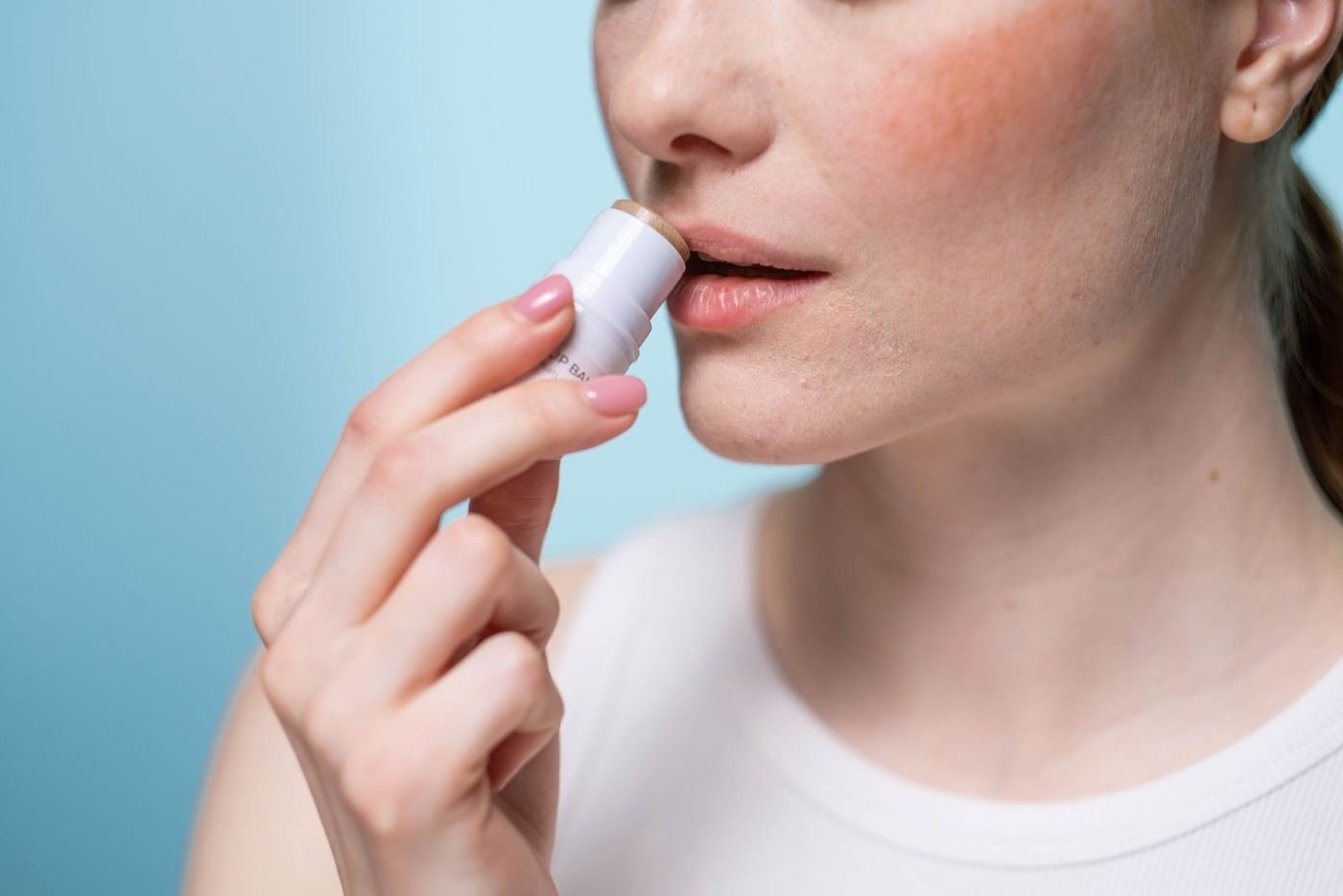
Chapped Lips in Winter: Why They Crack, and What Dermatologists Say Helps
Lips are usually the first thing to give up when the weather turns. A cold walk, a heated office, a long night with the radiator on, and by morning there is that tight, papery feeling that no amount of balm seems to fix. It is easy to treat chapped lips as a minor winter tax. The research suggests something more interesting: lips are built differently from the rest of the face, and a few common habits quietly make them worse.
What follows draws on the American Academy of Dermatology (AAD), Cleveland Clinic, the NHS, DermNet and a study published in the British Journal of Dermatology. It is general information, not a diagnosis. Lips that stay sore, swollen, bleed often or do not improve deserve a proper look from a doctor or dermatologist.
Why lips dry out faster than the rest of the face
Cleveland Clinic explains that the skin on the lips is thinner and more sensitive than skin elsewhere on the body, and that lips do not contain oil glands. That matters, because the face relies partly on its own oils to slow water loss. Lips have to manage without that help.
A study of 303 healthy women aged 21 to 80, measured in winter and published in the British Journal of Dermatology in 2004, put numbers on the difference. Water loss through the surface of the lips was almost three times as high as on the cheek, and the cheek is already one of the thirstier areas of the body. Surface hydration on the lips came out at about one third of the cheek’s level. The researchers linked this to the way the outer cells of the lip form: they are less complete than the tough, flattened cells of ordinary facial skin, so the barrier holds water less well.
Put simply, lips start winter at a disadvantage. Cold air outside, dry heated air inside and wind on the walk in between all push them further.
The usual culprits
Cleveland Clinic lists the common causes of chapped lips as cold weather, hot or dry weather, sunburn, frequent lip licking and dehydration. The NHS adds wind, dry air, lip injuries and allergies, and notes that a lack of certain vitamins and minerals can sometimes play a part. Cleveland Clinic names iron and B vitamins in particular, alongside some medical conditions and medicines. Retinoids are a well-known example; the British Journal of Dermatology study found that an oral retinoid drug clearly increased water loss from the lips.
For most people in winter, though, the story is simpler: dry air, cold wind and a habit or two that keeps the cycle going.
Licking: the habit that backfires
Licking dry lips feels like a fix. It is the opposite. The AAD explains that as saliva evaporates, it leaves lips drier than before. DermNet describes how constant wetting and drying with saliva disrupts the skin barrier and causes inflammation, and how that inflammation then drives more licking. Left to run, the pattern can become lip licker’s dermatitis: redness, dryness and scaling on the lips and the skin around them, often in a shape that matches the reach of the tongue. DermNet notes it tends to worsen in winter and is common in school-aged children, although it can happen at any age.
The AAD’s practical suggestion is a swap: whenever the urge to lick appears, reach for a non-irritating balm instead. Picking and biting at flakes belong in the same category. Both the AAD and the NHS warn that they irritate the lips and slow healing.
Reading a lip balm label
This is where many routines go wrong. A balm that tingles, cools or stings can feel as if it is working. The AAD is clear that burning, stinging or tingling means the product is irritating the lips, and it should be stopped. Cleveland Clinic dermatologist Dr Melissa Piliang makes the same point, explaining that balms containing phenol, menthol and salicylic acid can actually make lips drier, which leads to more application and a vicious cycle.
While lips are chapped, the AAD suggests avoiding products that contain:
- Camphor, eucalyptus and menthol
- Fragrance and flavourings, especially cinnamon, citrus, mint and peppermint
- Lanolin
- Octinoxate or oxybenzone
- Phenol (or phenyl), propyl gallate and salicylic acid
On the helpful side, the AAD lists castor seed oil, ceramides, dimethicone, hemp seed oil, mineral oil, petrolatum, shea butter, white petroleum jelly and the sun filters titanium oxide and zinc oxide. It also recommends products labelled fragrance free and hypoallergenic. Cleveland Clinic’s list overlaps closely, adding glycerin. The NHS recommends a balm containing petroleum jelly or beeswax, and suggests trying a few different balms if one does not suit, since some people react to particular fragrances, dyes or cosmetic ingredients.
Ingredient advice varies a little between sources. Lanolin and waxes appear on some avoid lists, while beeswax appears on the NHS list of helpful options. The common ground is plain, fragrance-free and non-tingling. For the wider winter picture of occlusives and barrier creams, the Veloraa guide to a winter skincare routine for dry skin covers the same logic for the face, and the ceramide moisturisers comparison explains why ceramides keep turning up in barrier care.
A simple winter lip routine
Pulling the dermatology advice together gives a routine that is short enough to actually follow:
- Through the day: apply a non-irritating balm several times a day, the AAD advises, and again after eating and drinking, as Cleveland Clinic suggests.
- At night: for very dry, cracked lips, the AAD recommends a thick ointment such as white petroleum jelly, because ointment seals in water longer than waxes or oils.
- Outdoors: use a balm with sun protection. The AAD recommends SPF 30 or higher with titanium oxide or zinc oxide, reapplied every two hours, and points out that sunburn on dry lips can trigger cold sores. The NHS sets its minimum at SPF 15, also reapplied every two hours.
- In the cold: the NHS suggests covering the lips with a scarf outside.
- Small habits: wash hands before applying balm, do not share balms (the NHS notes this can spread germs), and keep metal objects such as paperclips and jewellery away from the lips, which the AAD says can irritate them.
- Water and air: drink enough water, and consider a humidifier in the bedroom, which the AAD says can be especially useful for anyone who breathes through the mouth at night.
Indoor heating deserves its own mention, because it dries far more than lips. The Veloraa explainer on indoor heating and dry skin covers humidity ranges and how to keep a humidifier clean.
How long healing should take
Patience helps here. Both the AAD and Cleveland Clinic say that with consistent self-care, chapped lips usually show clear improvement or heal within two to three weeks. Cleveland Clinic adds that treating them early speeds things up and helps avoid complications such as infection. To stop the cycle starting again, the AAD suggests continuing to use balm whenever the air is dry, indoors or out.
When it is not just chapping
Not every dry lip is a winter lip. Cleveland Clinic describes several types of cheilitis, the medical term for inflamed lips, including forms caused by sun exposure, allergic reactions, medicines and eczema.
Cracks at the corners of the mouth are a common example. DermNet describes angular cheilitis as a common, non-contagious inflammation of the mouth corners, most often caused by prolonged contact with saliva, with painful cracks that worsen on opening the mouth, plus redness, crusting or oozing. Risk factors it lists include dry chapped lips, dentures, oral thrush and certain nutritional deficiencies, and it notes that lip licking makes it worse.
The AAD also flags actinic cheilitis, a precancerous condition caused by sun damage that leaves one or both lips dry and scaly. That is one more reason sun protection on the lips is not optional, even in winter.
The signs that warrant a professional opinion:
- No real improvement after two to three weeks of good self-care (AAD).
- Lips that are hot, painful and swollen, which the NHS says could be a sign of infection.
- Frequent bleeding that home care does not settle (Cleveland Clinic).
- A small, fluid-filled blister, which the NHS says may be a cold sore.
- Persistent cracking at the corners of the mouth or a patch that stays rough and scaly.
The short version
Lips lose water faster than the rest of the face and have no oil glands to fall back on, so winter hits them first. The fixes are refreshingly unglamorous: stop licking, skip anything that tingles, choose a plain fragrance-free balm or ointment, wear SPF on the lips outdoors and give the routine two to three weeks. If nothing changes by then, it is worth asking whether something other than the weather is behind it.
Sources
- American Academy of Dermatology: 7 dermatologists’ tips for healing dry, chapped lips
- Cleveland Clinic: Chapped lips (cheilitis)
- Cleveland Clinic: Are lip balms bad for you? With Dr Melissa Piliang
- NHS: Sore or dry lips
- DermNet: Lip licker’s dermatitis
- DermNet: Angular cheilitis
- Kobayashi and Tagami, British Journal of Dermatology (2004): Functional properties of the vermilion border of the lips