
Winter Skincare Routine for Dry Skin: A Practical, Sourced Guide
When the air turns dry, skin often feels tight before anyone is ready to call it winter. That shift can arrive with a cold snap, with the first weeks of indoor heating, or more quietly, with hot showers and a leftover summer gel that no longer feels like enough.
A useful winter routine is less about new bottles and more about how the skin is cleansed, hydrated and sealed. The steps below follow guidance from the American Academy of Dermatology, Cleveland Clinic and Mayo Clinic. They are a starting point, not a prescription. Anyone with eczema, psoriasis, or skin that stings when moisturiser goes on should see a dermatologist.
Winter is not one climate
A dry, windy winter and a milder, more humid one are not asking the same thing of a moisturiser. In colder inland or high-latitude places, low outdoor humidity often meets heated indoor air, which dries the room further. In milder or coastal winters the air may still hold more moisture, so a heavy ointment can feel like too much, even as hot showers quietly dry the skin out. Change the texture to suit the climate and the heating indoors. Keep the same order: cleanse gently, add water-binding ingredients, seal them in, and wear sunscreen during the day.
What cold, dry air and indoor heat do to the barrier
The American Academy of Dermatology describes a familiar winter pattern: cold air outside, hot air inside, and dry air almost everywhere, which can disrupt the skin’s barrier and leave it dry and itchy. That is especially hard on anyone who already lives with eczema or psoriasis. Cleveland Clinic dermatologist Dr Jennifer Lucas notes that the skin loses water both outdoors and in heated rooms, and that in colder weather it also makes fewer of the oils that help the barrier hold moisture. Mayo Clinic adds that central heating, space heaters and fireplaces all lower indoor humidity.
Ceramides, the lipids that help hold skin cells together, are a logical part of the response. For a label-by-label look at three widely discussed options, see Veloraa Finds’ comparison of CeraVe, Aestura and Minimalist ceramide moisturisers.
The three roles in a winter moisturiser
Winter formulas work best when they do three jobs, which can live in one cream or be layered as separate steps. Cleveland Clinic dermatologist Dr Alejandra Estemalik says a good moisturiser for dry skin will usually include ingredients from all three groups:
- Humectants attract and hold water. Glycerin and hyaluronic acid are the names most often recommended.
- Emollients soften and fill the gaps between skin cells. Shea butter sits in this group. Ceramides, the skin’s own barrier lipids, are often included in the same creams.
- Occlusives form a seal so water does not evaporate as quickly. Petrolatum, dimethicone and richer balms often become the missing last step on the driest nights.
The AAD suggests looking for a cream or ointment rather than a pump lotion, and favouring ingredients such as glycerin, hyaluronic acid, petrolatum, shea butter, lanolin, mineral oil or dimethicone. Choose products marked fragrance-free. “Unscented” can still contain masking chemicals that irritate sensitive skin.
A practical way to use those three roles is simple. A hydrating serum can go on first, while the face is still slightly damp, an emollient cream can follow, and an occlusive can finish the routine on the driest areas. That sequence matters more than the number of products.
A morning routine that stays short
- Cleanse gently, or just rinse. The AAD recommends a gentle, moisturising cleanser and steering clear of alcohol-heavy formulas. Mayo Clinic notes that people with sensitive skin can use a cleanser in the evening and simply rinse with water at other times, which can be a useful morning option when the skin is very dry.
- Apply a hydrating serum on damp skin. Glycerin or hyaluronic acid works better when the face is still slightly wet. Mid-winter is not the best time to introduce a strong new treatment serum.
- Follow with a cream, not a leftover summer gel. People with oilier skin can still use a lighter gel-cream in the morning and keep the richer texture for night.
- Finish with sunscreen. The AAD recommends a broad-spectrum, water-resistant sunscreen with SPF 30 or higher on skin that clothing does not cover, including the face, neck, ears and hands. A cream texture often feels more comfortable than a very matte gel. For why winter sun still matters, see Veloraa Finds’ winter sunscreen guide.
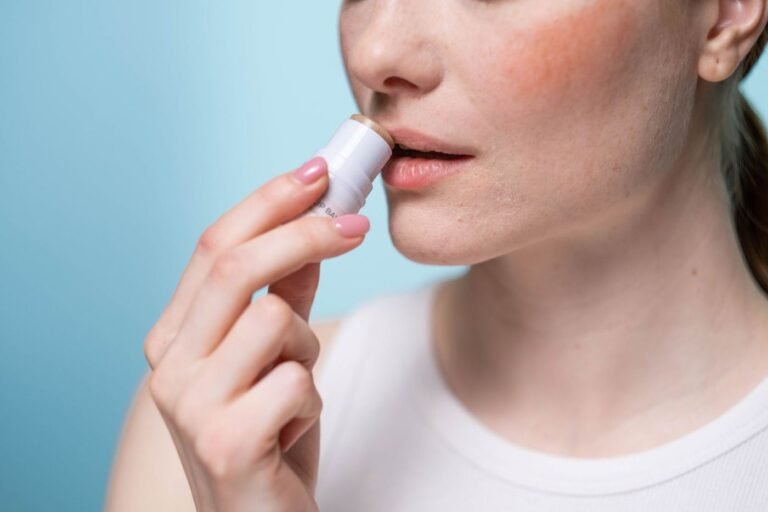
- Do not forget the lips. A simple balm or petroleum jelly is enough. If a lip product stings, the AAD suggests switching to one that does not.
A night routine that does the heavier work
- Cleanse properly if the day included sunscreen or makeup. A mild cream or milky cleanser is usually enough. If the makeup is heavier, a balm or oil cleanse followed by the same gentle cleanser is kinder than a single harsh wash.
- Use actives less often, or pause them on raw, flaky days. The AAD notes that many dermatologists suggest using glycolic acid, salicylic acid or retinol less often, or at a lower strength, in winter. Dr Lucas makes a similar point: products that felt comfortable in warmer months can become too drying once the heating is on. Prescription retinoids should only be changed with a doctor’s advice.
- Layer a hydrating serum, then a thicker cream. On the driest patches, such as the sides of the nose or the corners of the mouth, a thin layer of petroleum jelly over the cream can act as the occlusive seal.
Barrier-supporting ingredients can stay in the routine every day, including ceramides, glycerin and hyaluronic acid. For the 2026 shift toward barrier-first formulas, including beta-glucan, see the earlier trends piece on Veloraa Finds.
Sunscreen still belongs in winter
The sun feels weaker in midwinter, which is why sunscreen is often the first step to disappear. The AAD disagrees with that habit: UV is present whenever skin is outdoors, including on cloudy days, and reflected light from snow at altitude can raise the risk of burning. The World Health Organization notes that UV levels rise by around 10% with every 1,000 metres of altitude, and that fresh snow can reflect as much as 80% of UV radiation.
Body, lips and hands
- The AAD recommends keeping showers to five to ten minutes in warm, not hot, water, then patting the skin dry and moisturising while it is still damp. Cleveland Clinic suggests the cream go on within about three minutes, before the water on the skin evaporates.
- A body cream or ointment, applied right after bathing, does more than a thin lotion used hours later.
- Gloves protect hands from cold air and from repeated wet work. Keep a small fragrance-free hand cream by the sink, and a little petroleum jelly on very dry hands at night if needed.
- Wool against bare skin can itch. The AAD suggests a cotton or silk layer under rougher fabrics.
- A humidifier in the bedroom can put moisture back into heated indoor air. Mayo Clinic and Cleveland Clinic both point to a range of about 30% to 50% humidity. The U.S. Environmental Protection Agency advises not to push indoor humidity above 50%, and to keep portable humidifiers clean so they do not become a source of mould.
When to see a dermatologist
The AAD advises seeing a dermatologist if dryness continues despite these changes, because a condition such as atopic dermatitis or psoriasis may be involved. Board-certified dermatologist Dr Samer Jaber, writing for the AAD, flags dryness that becomes painful, cracked, bleeding, stinging or very irritating. For a longer timeline ahead of a wedding or photographed event, see Veloraa Finds’ guide to skin prep before a wedding or big event (add this link when that post is published).
FAQ
Is a summer gel moisturiser enough in winter?
Often not, especially in cold, dry outdoor air or in heated indoor rooms. The AAD recommends a cream, oil or balm when lighter lotions stop feeling comfortable. In milder, more humid winters, a lighter texture in the morning and a richer cream at night can be enough.
Should sunscreen be used on foggy, cloudy or cold days?
Yes, on skin that is not covered by clothing. The AAD says UV exposure happens whenever skin is outdoors, including in winter and on cloudy days. A broad-spectrum SPF 30 or higher is the baseline. Reapply during long outdoor stretches, including winter events and walks in snow.
Do humidifiers actually help dry skin?
They can, because they raise the moisture in indoor air that heating has dried out. The AAD suggests running a portable humidifier in the bedroom at night and cleaning it regularly. Mayo Clinic and Cleveland Clinic both recommend about 30% to 50% humidity. A humidifier complements moisturiser. It does not replace it.
Should retinol or exfoliating acids be stopped completely in winter?
Not automatically. The AAD’s advice is to use them less often, or at a lower strength, if they start to feel too drying. Prescription retinoids should only be changed with a dermatologist’s guidance. On raw or flaky nights, skip the active and use a simple cream.
Sources
- American Academy of Dermatology: Your winter skin survival kit
- American Academy of Dermatology: Dermatologists’ top tips for relieving dry skin
- American Academy of Dermatology: Why you need sun protection in the winter
- American Academy of Dermatology: How to pick the right moisturizer
- Cleveland Clinic: How to prevent dry skin this winter, with Dr Jennifer Lucas
- Cleveland Clinic: Choosing the best moisturizer for dry skin, with Dr Alejandra Estemalik
- Mayo Clinic: Humidifiers and indoor humidity
- Mayo Clinic: Dry skin, symptoms and causes
- Mayo Clinic: Dry skin, diagnosis and treatment
- American Academy of Dermatology: Sunscreen FAQs, including cloudy-day UV
- U.S. Environmental Protection Agency: Use and care of home humidifiers
- World Health Organization: Ultraviolet (UV) radiation Q&A
- Veloraa Finds: Three ceramide moisturisers compared
- Veloraa Finds: Why sunscreen still matters in winter
- Veloraa Finds: Barrier-first skincare trends in 2026
- Veloraa Finds: Skin prep before a wedding or big event (add this link when that post is published)



2 Comments