Hornbill Festival 2026 in Nagaland: Dates, Permits and How to Plan the Trip
Every December, the hills around Kohima fill with drumbeats, warrior dances, folk songs and food stalls. The Hornbill Festival is Nagaland’s biggest cultural celebration and one of the most distinctive festivals in India. The 2026 edition, the 27th, is set for December 1 to 10.
For anyone considering the trip this year, here is what is confirmed so far, along with the paperwork and planning details worth sorting out early.
The basics
- Dates: December 1 to 10, 2026.
- Venue: Naga Heritage Village, Kisama, about 12 km south of Kohima.
- Organiser: the Government of Nagaland.
- Tickets: Time Out India lists entry at around ₹50 to ₹100, available on site, with prices subject to change.
- History: held every December since 2000.
The festival takes its name from the hornbill, a bird that Time Out India notes is found in plenty in the state. The opening day coincides with Nagaland’s Statehood Day on December 1, as DD News notes.
How the festival has grown
At a preparatory meeting held at Bamboo Hall in Kisama on October 13, 2026, state officials reflected on how far the event has come. According to Nagaland’s Department of Information and Public Relations (DIPR), the festival began as a three-day event, expanded to five days and then to ten. It now includes more than 300 events across dozens of venues around the state.
The same report noted growing interest in mini-Hornbill festivals in other districts, as well as an e-sports tournament planned by the state’s Department of Youth Resources and Sports for this year’s edition.
What to expect at Kisama
The morungs
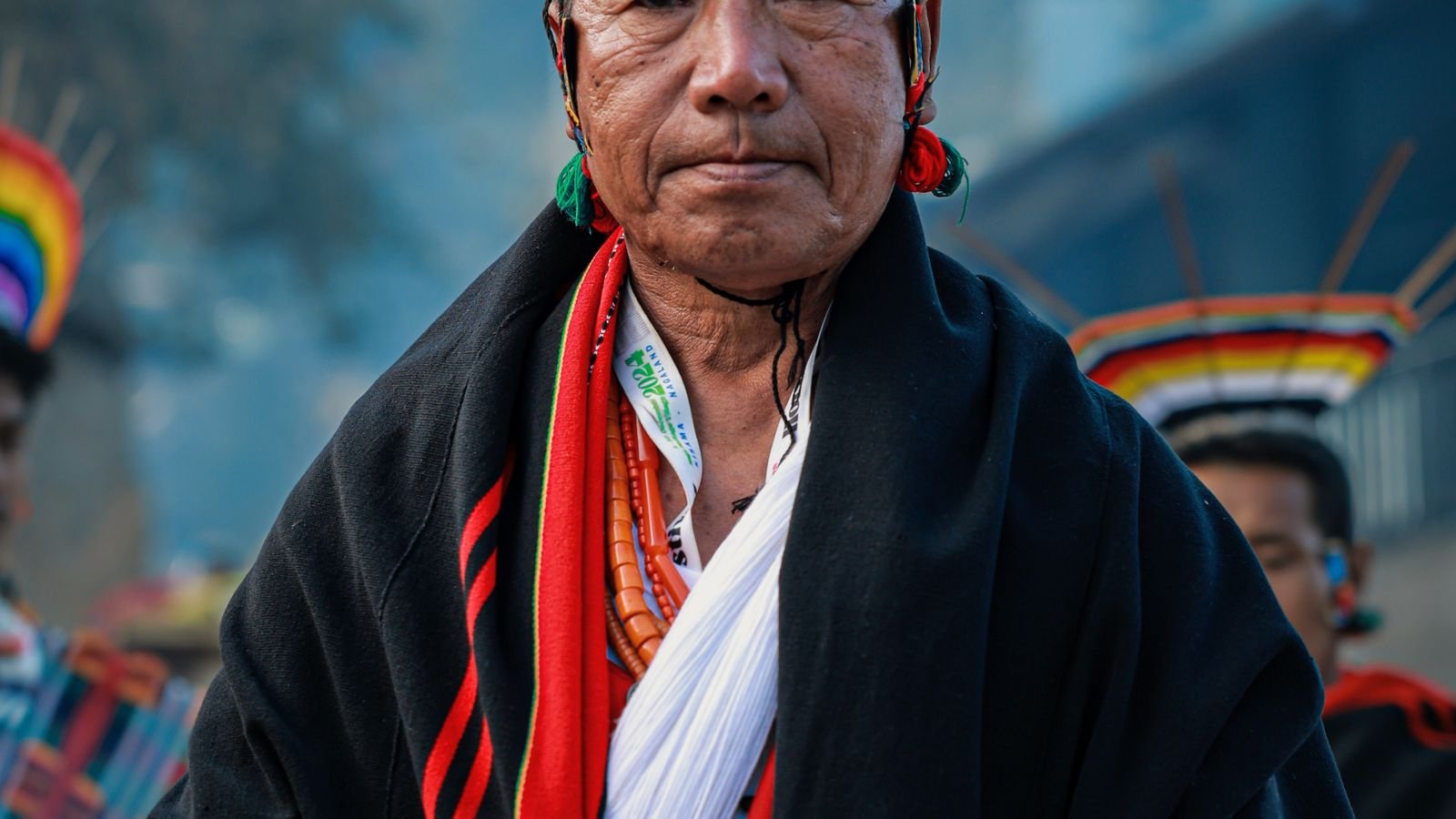
The heart of the heritage village is its cluster of morungs, traditional houses built in the style of each Naga community. During the festival, these become spaces for performances, food, crafts and demonstrations. Time Out India describes the village as “a buzzing cultural playground” during the festival.
Performances and traditional sports
Cultural troupes from across the state perform warrior dances and folk songs. Previous editions, according to Time Out India, have also featured Naga wrestling, chilli-eating contests and a night carnival in Kohima. The exact lineup changes every year.
Music after dark
Evening programmes in Kohima, including the Hornbill Music Festival, stretch the experience well beyond the daytime arena at Kisama.
Food and crafts
Time Out India notes that communities showcase their food, crafts and textiles at their morungs. Buying directly from these stalls is a simple way to support local makers.
The Inner Line Permit
This is the most important part of the planning. Under the Bengal Eastern Frontier Regulation of 1873, an Inner Line Permit (ILP) is needed for anyone entering Nagaland who is not an indigenous inhabitant of the state. That applies to Indian citizens from other states too.
According to the official Nagaland ILP portal’s FAQ:
- Applications are made online at ilp.nagaland.gov.in.
- Tourists do not need a local guarantor, but they do need to provide a local contact.
- Processing can take anywhere from a few hours to two to three working days.
Since rules and fees can change, it is best to check the portal directly before booking travel. International visitors should check the separate requirements that apply to foreign nationals.
Getting there
By air
Dimapur Airport is the closest, about 74 km from Kohima. Time Out India puts the drive at 2 to 3 hours by taxi.
By train
Dimapur Railway Station connects to regional hubs such as Guwahati. Shared taxis and buses run onwards to Kohima.
By road
Buses run from Guwahati to Kohima and Dimapur. From Kohima, Kisama is about 12 km away by shared taxi or cab.
A note on roads this year
ThePrint, citing PTI, reported that a landslide on August 13 damaged a stretch of National Highway 29 between Kisama and Phesama. The Chief Minister said access to the festival venue would be maintained, and the road was expected to be made motorable by the latter part of November. Checking the latest local updates closer to the date is wise.
Practical tips
- Book stays early. Kohima’s hotels and homestays fill up quickly in December.
- Pack warm layers. December evenings in the hills get cold.
- Carry cash. Smaller stalls and village vendors may not accept cards.
- Plan more than one day. The festival has a lot going on at once, and two or three days allows time for both Kisama and the evening events in Kohima.
- Be respectful with cameras. Asking before photographing performers and elders up close is basic courtesy.
Why it is worth the trip
Few festivals bring together so many communities, art forms and food traditions in one place. Beyond the festival grounds, the region’s green ridges, villages and winter light make Kohima a rewarding destination in its own right. With the dates set and preparations underway, now is a good time to sort out the permit and accommodation.
Sources
- Time Out India: Everything to know about Hornbill Festival 2026
- DIPR Nagaland: Chief Minister stresses coordinated efforts for Hornbill Festival 2026
- DD News: Nagaland gears up for 27th edition of Hornbill Festival
- ThePrint (PTI): Nagaland CM reviews preparedness for Hornbill Festival
- Nagaland ILP portal: FAQ
Photo: Anusree GS on Pexels