Why Indoor Heat and Dry Air Rough Up Skin in Winter, and What Actually Helps
Winter dryness is often blamed on the weather outside, and the weather does play a part. A lot of the damage, though, happens indoors. Heating takes moisture out of the air. Long, hot showers then take more moisture off the skin. By bedtime the face can feel tight, the hands look rough, and the room still feels warm.
The useful changes are mostly ordinary ones: shorter, warmer showers, a cream put on while the skin is still damp, kinder fabrics, and a clean humidifier kept in a sensible range. The guidance below comes from the American Academy of Dermatology, Cleveland Clinic, Mayo Clinic and the U.S. Environmental Protection Agency. It is general information, not a treatment plan. Anyone with eczema, psoriasis, or dryness that becomes painful, cracked or very irritating should see a dermatologist.
The cold-outside, dry-inside cycle
The American Academy of Dermatology describes a familiar winter pattern: cold air outside, hot air inside, and dry air almost everywhere, which can disrupt the skin’s barrier and leave it dry and itchy. That is especially hard on anyone who already lives with eczema or psoriasis.
Cleveland Clinic dermatologist Dr Jennifer Lucas explains the two sides of the same problem. Outdoor air holds less moisture once temperatures drop, so the skin loses water outside. Running the heat indoors lowers humidity as well, so the skin keeps losing water after the door is closed. In colder weather, she adds, the skin also makes fewer of the oils that help the barrier hold moisture in. Mayo Clinic is direct about the indoor sources: central heating, wood-burning stoves, space heaters and fireplaces all lower the humidity in the air.
Living in a climate that already has low humidity raises the risk further, Mayo Clinic notes. A milder outdoor season does not cancel out dry indoor air if the heating is running hard.
What happens to the barrier
Dry skin, which Mayo Clinic also calls xerosis, happens because water is lost from the outer layer of skin. The result can be tightness, itch, flaking, fine lines or, when it is more severe, cracks that may bleed. A damaged barrier also has a harder time keeping irritants out, which is why winter often makes an existing eczema or psoriasis flare feel worse.
Ceramides, the lipids that help the outer layer hold water, are a logical part of the response. For a closer look at three widely discussed creams, see Veloraa Finds’ comparison of CeraVe, Aestura and Minimalist ceramide moisturisers.
Showers and water temperature
A long, hot shower feels like the obvious answer to a cold day. It is one of the quicker ways to make dry skin worse. The AAD recommends keeping showers and baths to five to ten minutes, in warm rather than hot water, then patting the skin dry and putting moisturiser on while it is still damp. Cleveland Clinic gives a tighter window for that last step: aim to get the cream on within about three minutes, before the water on the skin evaporates.
Mayo Clinic makes the same points, and adds that bathing more than once a day can strip the skin’s natural oils. A gentle, fragrance-free cleanser is the usual recommendation. The AAD warns that “unscented” is not the same as fragrance-free, because masking chemicals can still be present and can irritate sensitive skin.
Humidifiers, and a sensible humidity range
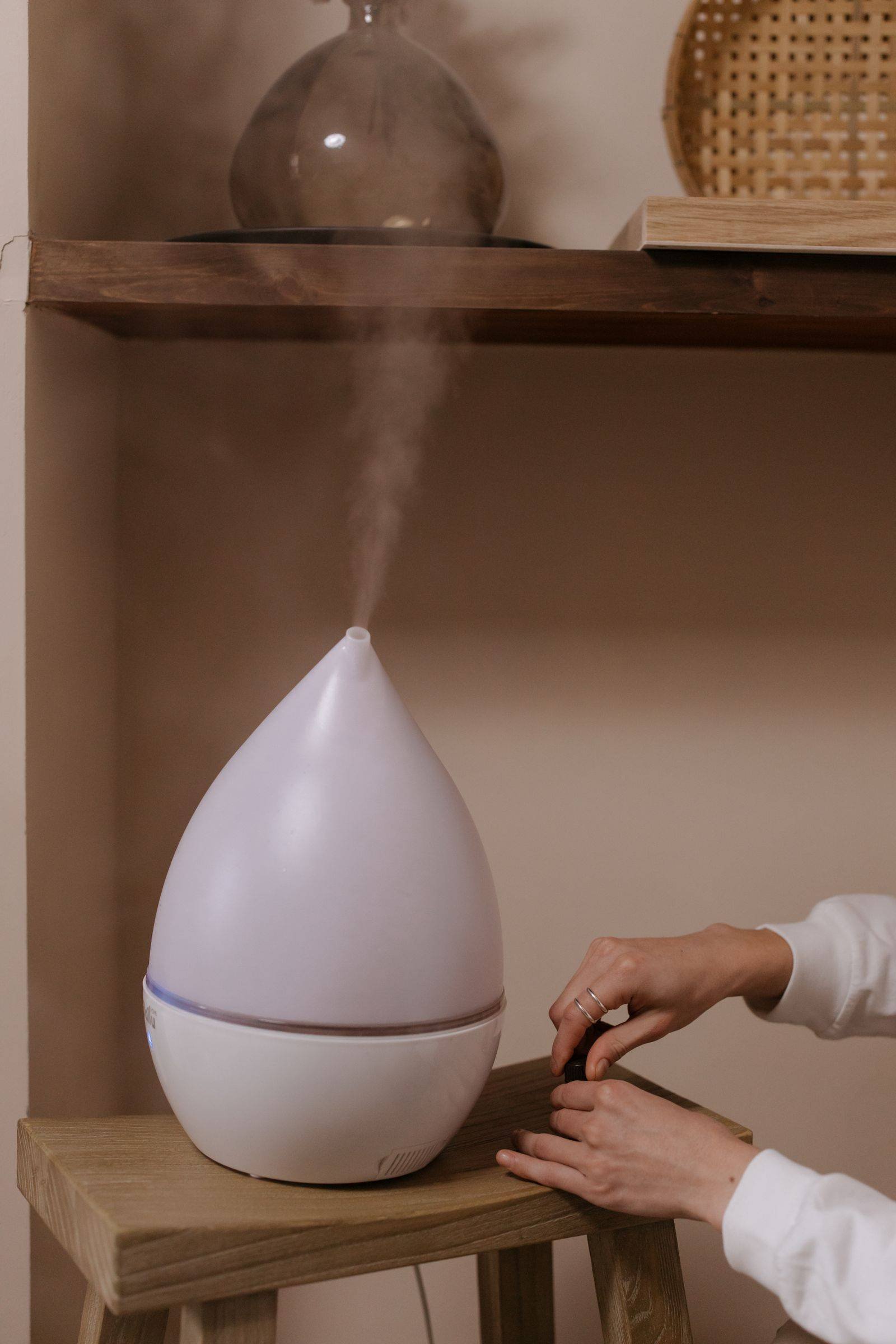
A portable humidifier can put moisture back into heated indoor air. The AAD suggests running one in the bedroom at night and cleaning it regularly so it does not become a source of mould. Mayo Clinic and Cleveland Clinic both point to a range of about 30% to 50% humidity. Low humidity can dry the skin, Mayo Clinic notes, while high humidity can encourage condensation, mould, dust mites and bacteria.
The U.S. Environmental Protection Agency advises not to humidify indoor air above 50%, because higher levels may encourage the growth of biological organisms in the home. Mayo Clinic adds that if nearby windows, carpets or fabrics become damp, the machine should be turned down or used less often. A hygrometer, or a humidifier with a built-in humidistat, is the straightforward way to know where the room actually sits.
Cleanliness matters as much as the setting. Mayo Clinic warns that a dirty tank can release bacteria or mould into the air, which is a particular concern for anyone with asthma or allergies, and can be a problem for healthy people too. Its practical steps for portable machines include using distilled or demineralised water, emptying and drying the tank daily if possible, cleaning about every three days, and following the maker’s instructions for filters. The EPA’s humidifier-care advice likewise stresses regular cleaning and keeping indoor humidity from rising too high. A humidifier complements moisturiser. It does not replace it.
Fabric, gloves and the walk from the door
Wool against bare skin can itch, even on skin that is otherwise well. The AAD suggests loose-fitting cotton clothes, and a cotton or silk layer under rougher fabrics. Mayo Clinic also flags wool as a fabric that can irritate, and recommends covering as much skin as possible in cold or windy weather, including with gloves or mittens, scarves and hats.
Hands often show the problem first. The AAD recommends gloves for cold, dry air and for wet work such as washing up, plus a fragrance-free hand cream after washing. Cleveland Clinic suggests a thin layer of a petroleum jelly-style product on very dry hands at night, covered with a cloth glove. That is a simple occlusive seal, not a new treatment.
Moisturiser at night, sunscreen by day
Once the indoor air is drier, a leftover summer lotion often feels thin. The AAD recommends a cream or ointment rather than a pump lotion for dry winter skin, with ingredients such as glycerin, hyaluronic acid, petrolatum, shea butter, lanolin, mineral oil or dimethicone. A hydrating layer can go on slightly damp skin, with a richer cream or a little petroleum jelly on the driest patches at night.
Indoor heat does not cancel out ultraviolet light. The AAD still recommends a broad-spectrum, water-resistant sunscreen with SPF 30 or higher on skin that clothing does not cover, including in winter and on cloudy days. For why that still matters, and for three SPF 50 options, see Veloraa Finds’ winter sunscreen guide. Barrier-supporting ingredients such as ceramides, glycerin and hyaluronic acid can stay in the routine every day. For the wider 2026 shift toward barrier-first formulas, see the earlier trends piece on Veloraa Finds.
When dryness is more than weather
If dryness continues despite shorter showers, a richer cream, kinder fabrics and a clean humidifier, it is time to see a dermatologist. The AAD notes that an underlying condition such as atopic dermatitis or psoriasis may be involved. Board-certified dermatologist Dr Samer Jaber, writing for the AAD, flags dryness that becomes painful, cracked, bleeding, stinging or very irritating. Mayo Clinic also advises medical advice if dry skin lasts despite self-care, becomes inflamed or painful, disturbs sleep, or leads to open sores.
Prescription retinoids, and any change to a prescribed routine, should only be adjusted with a doctor’s guidance. Ordinary winter dryness can often be eased at home. A worsening rash cannot be guessed away with a new bottle.
FAQ
Does indoor heating really dry the skin?
Yes. Mayo Clinic lists central heating, wood-burning stoves, space heaters and fireplaces among the indoor sources that lower air humidity. Cleveland Clinic and the AAD describe the same cold-outside, dry-inside pattern.
What humidity should a bedroom humidifier aim for?
Mayo Clinic and Cleveland Clinic both point to about 30% to 50%. The EPA advises not to exceed 50%. A hygrometer helps keep the setting in that range, and the tank needs regular cleaning.
Can a humidifier replace moisturiser?
No. It can make indoor air less drying, which helps, but the AAD still recommends a cream or ointment on damp skin, and gloves or petroleum jelly on very dry hands. The two steps work together.
Should showers be skipped in winter?
Not necessarily. The AAD and Mayo Clinic recommend shorter showers, five to ten minutes, in warm rather than hot water, and moisturiser afterwards. Mayo Clinic also suggests not bathing more than once a day if the skin is dry.
Sources
- American Academy of Dermatology: Your winter skin survival kit
- American Academy of Dermatology: Dermatologists’ top tips for relieving dry skin
- American Academy of Dermatology: How to pick the right moisturizer
- American Academy of Dermatology: Sunscreen FAQs
- Cleveland Clinic: How to prevent dry skin this winter, with Dr Jennifer Lucas
- Mayo Clinic: Dry skin, symptoms and causes
- Mayo Clinic: Humidifiers and indoor humidity
- U.S. Environmental Protection Agency: Use and care of home humidifiers
- Veloraa Finds: Three ceramide moisturisers compared
- Veloraa Finds: Why sunscreen still matters in winter
- Veloraa Finds: Barrier-first skincare trends in 2026